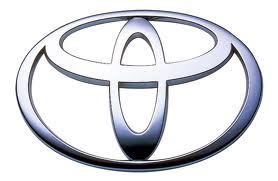
I was watching a video this morning that was on Paul Akers “American Innovator” site. You can find it here: The Lean Round Table One of the interesting concepts from this video is about the idea of how Toyota sees lean. In the video, Paul describes the Toyota emblem and what it represents. The inner circle represents the individual. If you can teach and change the individual, they will improve and become better. The second circle represents their village or their community. That improved individual then goes out and improves that community. The outer circle represents the world. As the individual improves and their community improves you are actually making the world a better place.
 This may seem a bit lofty or strange, but I was putting it in context with some of the other books I’ve been reading. In Henry Ford’s book “Today and Tomorrow”, he describes how he came to the idea of doubling all his worker’s wages. It was his opinion that if the workers in his plant could make more money, then they could be one of the main customers for his product. This was a crazy idea at the time but he was set on it and proved everyone wrong. Henry Ford did double the wages of the average worker and they actually were one of the main customers for the early motor vehicles.
Ford was one of the original lean thinkers. His vision for the motor car was to give the average man the ability to enjoy his leisure time and the ability to drive out to the country and really see more of America. But to be clear, Ford didn’t just double everyone’s wages, the people in his plant helped Henry Ford double his productivity first. Ford counted on his employees to drive the innovation and continuous improvement in their plant. One piece flow and just in time? Both Ford ideas. Elimination of waste? A passion for Ford. Your Kingsford briquettes are a byproduct of his need to find a way to use the sawdust from the shop floor rather than throw it away. Ford did studies on working hours. They typical work week was 6 days back then and a lot more hours per day. He did studies on efficiency and found he could get as much production from five 8 hour days as he was from the current standard, thus freeing up more time for his workers to spend their new money. He was appalled at the state of health care at the time so he created a hospital system that would utilize his efficiency concepts and make health care affordable for his workers. The Henry Ford Health System is still and excellent example of lean in health care. His vision of the individual, the community and the world were all intertwined. He was changing the world one factory worker at a time.
 In Taiichi Ohno’s book “Workplace Management”, he talks about how at the end of World War 2, it took 5 Japanese workers to equal the output of one European worker and 12 Japanese workers to equal the output of one American worker. The desire to improve productivity and become “lean” (a term not yet invented) was driven by a need to help their community. That change had to start with the individual. The idea of Kaizen or Continuous Improvement was born from this societal need. In this video, the true meaning of the symbols that make up the word Kaizen in Japanese are described. The interesting point is that it really means “change for the better” and the root is societal change. Changing society for the better.
In our world here in the United States, most things are driven by profit. We don’t see a world view that often. We work at a company and want to make that company better so it can make more money and be successful and hopefully that will translate into economic success for each of us. But what if the goals were a bit different? What if the goal was to improve the people at your company so that your community, your society and your world could get a little better? Lean could be a way to ensure that the exterior skins of our buildings are built right here in our community. Not fabricated in some foreign land and shipped all the way across the world to be assembled in another country and finally find its way to the building next to your home. Real community participation between the workers in an area and the builders and the owners. But, the only way this can really happen is if we teach and train our people to be more productive than the cost of buying these materials from the other side of the world. Building a lean culture within your company could be the start of that change.
