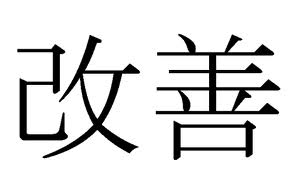
We had our first Kaizen events at Walters & Wolf last week. Kaizen is the word for Continuous Improvement in Japanese. It literally means, Change for the Good. We sometimes use Kaizen to refer to the small incremental changes we are making each day. But we sometimes use it as an adjective to describe a more focused improvement event.
I had attended a Kaizen event at another company a while ago (see my previous post about the slot machine company) and was very impressed with how much you could get done in a week with a focused group of people. We have been searching for someone to help us with doing this at our company and I’m happy to say we have found a good guide.
If you’ve read Paul Akers book, you will remember the story about how two young kids, Brad and John, came to Fastcap and helped Paul understand how to improve his setup times so that he would not have to build in batches and could produce his laser jamb product using pull and flow methods. Brad came to our facility a few weeks ago and agreed to help us with learning more about lean and how it applies to our company.
We had two events this last week. One in the shop and one in the office. Both were tremendously successful and really helped establish how powerful it can be if you get a group of people together with a focused purpose to change or study a process.
I think the most interesting thing was looking at how the lean principles of flow and pull can be applied to any process. Obviously our shop is a very physical process. If you work in batches it produces inventory that can be seen. You can typically identify your bottlenecks by the amount of material that stacks up before them. You can watch people leave their stations to go and look for materials or information. It is much easier to “see” what is happening. In our office Kaizen, we were having very similar issues. But here, you can’t walk up and see it. In a virtual process, you have to create a map of what is really happening in order to start to see where you are creating batches and creating bottlenecks.
I learned a ton this past week. I learned how to address an “unbalanced” line. In our circumstances (office and shop) we don’t do the same thing every day or even every 15 minutes. You can’t just do a simple operator load chart and balance our lines. You have to address the fact that the line will be unbalanced at all times and find a way to address that to get the best possible throughput. As in most things, the planning and communication are critical to the process. I also learned how to analyze a physical process and also how to analyze a virtual process. We learned how to see the Muri and Mura in our virtual processes and how to use Just In Time concepts to address them.
These coming weeks will be very interesting as we implement some of the ideas we came up with. I will keep you posted on our progress.